
Introduction
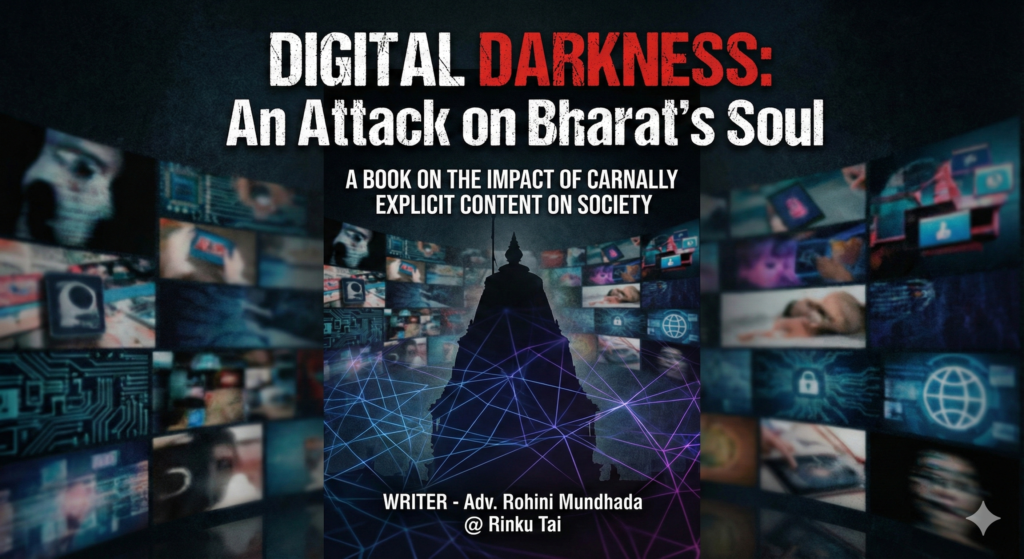
In this foundational chapter, we peel back the layers of the modern virtual interface to reveal the underlying mechanisms that impact the soul of Bharat. This is an exploration of how the digital world, once a promise of boundless knowledge, has been subtly reconfigured into a space of psychological and moral challenge.[1] By defining the specific vocabulary of this landscape, you can begin to understand the quiet transformation occurring within our families and the broader community.
1. The Anatomy of a Digital Shadow
The digital experience is often steered by forces invisible to the casual eye. We examine the architecture of dark patterns, which include deliberate design choices in applications and websites that manipulate users into making decisions against their better judgment.[2] Within this framework, I will try define the presence of material that appeals to the prurient interest, creating a digital shadow that follows users, often beginning with small, deceptive nudges and leading toward a consistent exposure to lascivious content.
For purpose of legal pleadings and procedures and for purpose of this book/article series “prurient interest” can be defined as “having or encouraging an excessive or inappropriate interest in sexual matters, especially the sexual activities and intimate affairs of others.”[3] The similar phrase had been used many times by the eminent judiciary of Bharat. For purpose of legal procedures and for purpose of this book/article series “lascivious content” can be defined as “content feeling or showing strong sexual desire.”[4]
2. Cognitive Dissonance in the Digital Age
As Bharat consumes data at an unprecedented rate[5], a profound internal conflict arises. In this era of digital world even child is knowing how to watch videos on mobile before going to school. Bharatiya citizen using this technology at large and it is one of the largest society on this planet consuming information from internet and specifically from social media. This section explores the psychological tension experienced when the values absorbed through our cultural heritage clash with the depraved or corrupting influences found online. I will analyze how individuals resolve this discomfort, often by normalizing behavior that was previously considered contrary to societal morality, leading to a gradual shift in the national psyche. The horrible decline of this normalization will lead a broken society if left unanswered, as at present such content is fueling the prurient interests of general public.
3. Identifying Digital Propaganda vs. Freedom of Expression
The right to expression is a cornerstone of democracy, yet it is frequently used as a shield for the dissemination of harmful narratives.[6] You will navigate the delicate balance between legitimate speech and the strategic promotion of material that tends to deprave and corrupt in this section. This narrative helps the reader distinguish between an authentic voice and a calculated attempt to erode community standards under the guise of liberty.
Free speech is not at all absolute right guaranteed by the Constitution of Bharat. It comes with reasonable restrictions. These restrictions include Sovereignty and integrity of Bharat, Security of the State, friendly relations with foreign States, public order, decency or morality, contempt of court, defamation, incitement to an offence.[7] When it comes to lascivious content, it causes disturbance in public order, it is indecent and attacks on morality of general public. In many cases such content is used to defame a person. Such type of content may incite carnal crimes against any person, as it causes concupiscence. For purpose of legal proceedings word “carnal” is used for “sexual” as synonym. For purpose of legal proceedings word “concupiscence” means “strong sexual desire”. Hence same words are used for purpose of this book.
4. The Spectrum of Digital Toxicity
The journey into digital darkness is rarely a sudden leap; it is a gradual descent. I will map the progression from the seemingly harmless habit of mindless scrolling to the more dangerous stages of radicalization and the consumption of carnally explicit conduct. This spectrum illustrates how the constant drip of low-quality, high-stimulation content can desensitize the mind, making it more susceptible to extreme and harmful ideologies. This topic is discussed as the dopamine loop created by such content can significantly impact mental clarity, leading to reduced focus on tasks that require sustained attention.[8] Additionally, the constant external stimulation can disrupt emotional regulation, contributing to feelings of restlessness or a constant need for external entertainment and thus user is trapped in a vicious trap of watching such harmful content.[9]
5. Cultural Sensitivity and Unique Vulnerabilities
Bharat’s demographic is unique in its deep-rooted familial and spiritual structures. However, these very strengths can become vulnerabilities in a digital space that does not respect traditional boundaries. Under this topic it will be discussed how the Bharatiya context is characterized by rapid internet penetration and how a youthful population is specifically targeted by those looking to exploit the gap between ancient wisdom and modern technology. This conflict between the wisdom and technology is not at all creating a fruitful result. Instead using the technology wisely, people are becoming slave to this and normalizing those trends which are harmful for vulnerable units of the society, specifically women and children.[10]
6. Literacy vs. Digital Fluency
There is a critical distinction between the ability to operate a smartphone and the wisdom to navigate the internet safely.[11] While basic literacy allows one to read and send messages, digital fluency requires the discernment to identify and reject material that is indecent or derogatory.[12] This section emphasizes that being online is not synonymous with being safe, and that true fluency involves the ethical application of digital tools. It is wisely said that every power is associated with some responsibility. As internet is empowering us to learn and master any subject on the reach of fingertips, it is our responsibility to use it wisely and reject the unwanted content. Even it is our responsibility to report such content to the platform on which it is published. Internet is new era of communicating information in few seconds, but it is our responsibility to respond such information. The content encouraging prurient interests is not at all acceptable even in modern countries like America, then why there is no strict law in Bharat to resolve this problem?
[1] Janna Anderson, Lee Rainie, “2. Expert essays on the expected impact of digital change by 2035”, Pew Research Centre, available at: https://www.pewresearch.org/internet/2023/06/21/expert-essays-on-the-expected-impact-of-digital-change-by-2035/, Last visited on 18.12.2025
[2] Anastasiia Soroka, “18 Dark Patterns Examples That Manipulate Users (and How to Avoid Them)”, Eleken, available at: https://www.eleken.co/blog-posts/dark-patterns-examples, Last visited on 18.12.2025
[3] “Prurient interest definition” Law Insider, available at: https://www.lawinsider.com/dictionary/prurient-interest, Last visited on 18.12.2025
[4] “Lascivious”, Oxford Learners Dictionaries, available at: https://www.oxfordlearnersdictionaries.com/definition/english/lascivious, Last visited on 18.12.2025
[5] “India Mobile Data Consumption Trends Report 2025-2030: Reliance Jio and Bharti Airtel Lead India’s 5G Revolution as Affordable Smartphones and Government Push Accelerate Adoption”, Global News Wire, Dt. 18.09.2025, available at: https://www.globenewswire.com/news-release/2025/09/18/3152188/28124/en/India-Mobile-Data-Consumption-Trends-Report-2025-2030-Reliance-Jio-and-Bharti-Airtel-Lead-India-s-5G-Revolution-as-Affordable-Smartphones-and-Government-Push-Accelerate-Adoption.html, Last visited on 18.12.2025
[6] John R. Vile, “Democracy and Free Expression” Free Speech Centre, Dt. 2.06.2025, available at: https://firstamendment.mtsu.edu/article/democracy-and-free-expression/, last visited on 18.12.2025
[7] Article 19(2) of the Constitution of India, 1949.
[8] Andy, “Why Your Brain Can’t Stop Scrolling: The TikTok Dopamine Loop”, Timeqube, Dt. 11.12.2025 available at: https://timeqube.com/blog/psychology/why-your-brain-cant-stop-scrolling-the-tiktok-dopamine-loop/, last visited on 18.12.2025
[9] Mariana Sofía Jiménez Nájera “Looks Great, but Lacks Meaning: The Impact of High-Stimulating Shows on Children”, Observatory, Dt. 14.5.2025, available at https://observatory.tec.mx/edu-news/the-impact-of-high-stimulating-shows-on-children/, last visited on 18.12.2025
[10] Margarita Louis-Dreyfus, “Is our obsession with innovation causing a humanity deficit?”, World Economic Forum, 22.8.2025, available at: https://www.weforum.org/stories/2025/08/obsession-innovation-humanity-deficit/, Last visited on 18.12.2025
[11] Gianfranco Polizzi, Tom Harrison, “Wisdom in the digital age: a conceptual and practical framework for understanding and cultivating cyber‑wisdom”, Dt. 4.03.2022, Springer, Ethics and Information Technology (2022) 24:16
[12] “What is Digital Fluency” CLRN Dt. 2.7.2025, available at: https://www.clrn.org/what-is-digital-fluency/, Last visited on 18.12.2025
Send an email by clicking the red button below! As you click the button an automatic mail will be ready for you to send. This email is addressing to Chief Ministers of all states of Bharat and Prime Minister of Bharat.
As you have sent the Email, share this article with others. Greater the social issue, more awareness is required!


Want to curb social media addiction, start reading!