
A Look Back at How Laws and Norms Regarding Carnally Explicit Material Have Evolved, Setting the Stage for the Current Crisis
Art or Vulgarity? Historical Debates on Temple Carvings and Literature
Bharat’s ancient heritage is replete with nude motifs in art and literature, sparking enduring debates on whether such depictions constitute sublime art or mere vulgarity. Temple carvings at sites like Khajuraho, built between 950-1050 CE by the Chandela dynasty, feature explicit sculptures of maithuna i.e. couples in amorous poses, often interpreted as tantric symbols of spiritual union rather than prurient indulgence. Similarly, classical texts like the Kamasutra (circa 400 BCE-200 CE) by Vatsyayana treat sexuality as an art form integral to dharma (duty) and artha (prosperity), framing it within ethical boundaries.
All these examples given to defame the rich culture are not in complete form, e.g. many ancient temples including Khajuraho are mere remains, having only half of the carvings left, or books like Kamasutra which was having more than 1000 chapters are now available with only 100 or 150 chapters as many of the chapters are lost during invasive destructions by foreign rulers of other faiths. Hence debating on such remains without knowing full context is nothing but denial of horrible impacts of the obscene content. One more aspect is that carvings on temple walls, pictorial or verbal depiction in books is in static form, but content with audio-visual effects are moving and hence such content is having more impact than a wall carving or a book.[1] Social media is full of such videos with graphic content.
Colonial encounters in the 19th century reframed these as “obscene.” British archaeologists like Alexander Cunningham described Khajuraho’s carvings as “indecent” and “disgusting,” aligning with Victorian puritanism that sought to “civilize” Bharatiya culture. This imposed dichotomy of art versus vulgarity ignited nationalist responses.[2] Figures like Swami Vivekananda defended temple art as symbolic of life’s holistic aspects, criticizing Western hypocrisy for viewing it through a lens of moral superiority.[3]
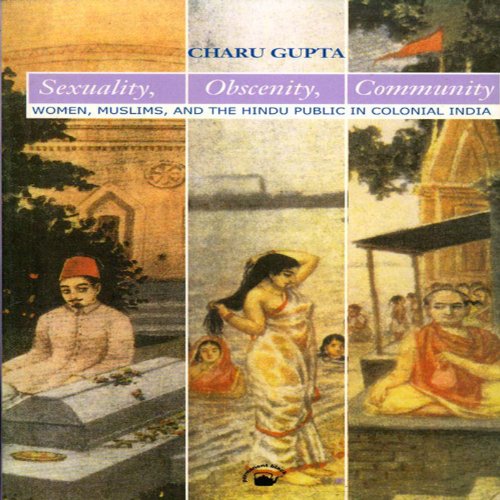
Post-independence, debates intensified amid modernization. In the 1950s, conservative groups labeled erotic literature as corrupting, while liberals argued for contextual appreciation. In the name of progressive society now they are trying to normalize it’s public distribution for money. The 1960s saw feminist critiques like Charu Gupta highlighting how colonial obscenity laws reinforced patriarchal control over women’s bodies, yet also how unchecked eroticism in art could perpetuate objectification.[4]
Liberal and woke narratives often romanticize these elements as evidence of ancient Bharat’s carnal liberalism, claiming modern restrictions betray this heritage and infringe on free speech. However, this view selectively ignores context: Khajuraho’s erotica comprises only 10% of sculptures, placed externally to symbolize transcendence over base desires before entering the sacred interior.[5] Equating this with today’s vulgar pornography distorts history; ancient depictions were ritualistic, not commodified for titillation. Liberals’ push to classify all explicit content as “art” under free speech umbrellas overlooks harms like the normalization of deviance, which erodes cultural sanctity.[6] Historical debates reveal that Bharatiya society has always distinguished between elevated expression and base vulgarity, a nuance lost in modern permissive ideologies that prioritize shock value over moral depth. Thus historical interpretations have resisted simplistic liberalization, emphasizing that true freedom lies in responsible expression, not unbridled vulgarity.
The Cinema Era: Censorship Battles from Independence to the 90s
Bharatiya cinema, emerging as a mass medium post-1947, became a battleground for obscenity norms, reflecting societal tensions between tradition and modernity. The Cinematograph Act of 1952 established the Central Board of Film Certification (CBFC), tasked with grading films and excising “obscene” content to uphold public morality.[7] Early battles focused on depictions of romance and sensuality; films like Satyam Shivam Sundaram (1978) faced cuts for “vulgar” costumes, sparking debates on artistic freedom.[8]
The 1950s-1960s saw conservative censorship amid nation-building. Directors like Satyajit Ray critiqued the CBFC for stifling realism, yet supported guidelines against gratuitous lewdness. The 1970s, under Indira Gandhi, intensified political censorship, but obscenity cases rose with “masala” films featuring item numbers i.e. dance sequences often deemed exploitative. Feminist groups protested these as objectifying women, countering liberal claims that such content empowered female performers.
The 1980s-1990s marked escalation with globalization. Films like Bandit Queen (1994) challenged norms with raw depictions of violence and sexuality, leading to CBFC bans overturned by courts.[9] The Shyam Benegal Committee’s 1980 recommendations for liberalized certification were partially adopted, but controversies persisted[10], such as the 1996 ban on Fire for lesbian themes, igniting free speech debates.[11]
Liberals decry this era’s censorship as regressive, arguing it suppressed diverse voices under moral pretexts. However, this overlooks how unregulated explicit content in cinema contributed to societal issues like eve-teasing and gender stereotypes.[12] The CBFC’s role was not mere prudery but a bulwark against vulgarity masquerading as art, protecting vulnerable audiences from desensitization. Historical battles reveal that without such checks, cinema could devolve into a vehicle for moral erosion, validating the need for boundaries over absolute free speech.
The Internet Explosion: How the 2000s Changed the Definition of Lewdness
The 2000s heralded the internet’s mass adoption in Bharat, transforming obscenity from tangible media to ubiquitous digital content. With broadband penetration rising from 0.2% in 2000 to over 2% by 2010, platforms like Orkut and early YouTube facilitated easy access to explicit material, redefining “lewdness” as instantaneous and borderless.
The IT Act 2000’s Section 67 criminalized online obscenity, but enforcement lagged amid rapid growth. The 2004 DPS MMS scandal, where a schoolgirl’s explicit video went viral, highlighted risks, leading to 2008 amendments in IT Act targeting child pornography and explicit publishing.[13] By the mid-2010s, social media amplified issues, with cases of revenge porn and deep-fakes surging.[14]
Liberals celebrated the internet as a free speech haven, dismissing regulations as censorship. Yet, this era exposed harms: increased cyber-obscenity correlated with rising sexual offenses, addiction among youth, and women’s exploitation.[15] The 2015 blocking of porn sites underscored governmental efforts to curb this, countering woke narratives that frame access to vulgarity as a right.[16] The 2000s shifted lewdness from elite consumption to mass democratization, but at the cost of societal fabric, proving that liberal unchecked freedom fosters chaos, not progress.
Case Studies: Landmark Judgments That Shaped Obscenity Laws
Several judicial decisions have molded Bharat’s obscenity jurisprudence, often rejecting liberal overreach. In Ranjit D. Udeshi v. State of Maharashtra, the Supreme Court upheld the ban on Lady Chatterley’s Lover, adopting the Hicklin test to define obscenity as corrupting the susceptible, prioritizing societal protection over absolute expression.[17]
The 1985 Samaresh Bose v. Amal Mitra refined this, emphasizing contemporary community standards and artistic merit, allowing nuance without liberal excess.[18] Aveek Sarkar v. State of West Bengal discarded the Hicklin test for the American Roth-Memoirs standard, focusing on prurient interest and lack of value, but maintained that context matters i.e. rejecting blanket free speech claims.[19] These judgments counter woke views by affirming that vulgarity, when devoid of redeeming purpose, warrants restriction to prevent moral corruption.
Conclusion
This historical overview demonstrates that Bharat’s obscenity laws have evolved as protective mechanisms against the perils of unchecked explicit material. From colonial impositions to digital adaptations, they have safeguarded cultural integrity amid ideological pressures. Against liberal assertions of vulgarity as free speech, the evidence points to societal harms: exploitation, desensitization, and erosion of values. The current crisis, fueled by digital proliferation, demands not liberalization but strengthened norms to restore balance. By heeding history, Bharat can navigate this challenge, prioritizing collective welfare over individualistic excess.
[1] Instructional animation versus static pictures: A meta-analysis, Science Direct, https://www.sciencedirect.com/science/article/abs/pii/S0959475207001077
[2] Purifying empire : obscenity and the politics of moral regulation in Britain, India and Australia, Deana Heath, https://archive.org/details/purifyingempireo0000heat
[3] Symbolism In Ancient Indian Art: Analysis Of Stupas And Temples, IJCRT, https://ijcrt.org/papers/IJCRT2501872.pdf
[4] Gendering Colonial India: Reforms, Print, Caste and Communalism, Charu Gupta
[5] Khajuraho Temple: Beyond the Erotic Sculptures, Famous Temples of India, https://famoustemplesofindia.com/khajuraho-temple-beyond-erotic-sculptures/
[6] Obscene or Artistic? The Poetics and Politics of the Obscenity Law in Indian Art and Literature, Dikshit Sarma Bhagabati, https://www.researchgate.net/publication/332156220_Obscene_or_artistic_The_poetics_and_politics_of_the_obscenity_law_in_Indian_art_and_literature
[7] Access to 43 OTT Platforms Blocked for Showing Obscene Content: Minister, Deccan Chronicle, https://www.deccanchronicle.com/nation/current-affairs/access-to-43-ott-platforms-blocked-for-showing-obscene-content-1924480
[8] Zeenat Aman recalls being accused of ‘obscenity’ for her role in Satyam Shivam Sundaram, Bollywood Bubble, https://www.bollywoodbubble.com/bollywood-news/zeenat-aman-recalls-being-accused-of-obscenity-for-her-role-in-satyam-shivam-sundaram/
[9] Top 10 Banned Movies in India: What They Didn’t Want You to See, Vastrakar, https://vastrakar.com/blog/banned-movies-in-india/
[10] Report Summary Report of the Expert Committee on CBFC, PRS India https://prsindia.org/files/policy/policy_committee_reports/1467347474_Report%20Summary%20-%20CBFC.pdf
[11] Screening of Fire Ignites Violent Protests in India, Ebesco, https://www.ebsco.com/research-starters/social-sciences-and-humanities/screening-fire-ignites-violent-protests-india
[12] Film Changed the Way People Saw Sexuality. Now, Social Media Does., UC Berkeley Research, https://vcresearch.berkeley.edu/news/film-changed-way-people-saw-sexuality-now-social-media-does
[13] What the DPS MMS tells us about consent in the digital age, Times of India, https://timesofindia.indiatimes.com/home/sunday-times/what-the-dps-mms-tells-us-about-consent-in-the-digital-age/articleshow/64238647.cms
[14] Justice for Women: Deep fakes and Revenge Porn, Miosotis Soto Santana, https://www.dpublication.com/wp-content/uploads/2022/02/27-10177.pdf
[15] Technology-facilitated sexual violence among sexual and gender minority youth: The moderating role of digital resilience, Science Direct, https://www.sciencedirect.com/science/article/pii/S0747563225000238
[16] India Comes Together To Overturn Internet Porn Ban, Forbes, https://www.forbes.com/sites/robcain/2015/08/05/india-comes-together-to-overturn-internet-porn-ban/
[17] 1965 AIR 881
[18] 1985 SCR SUPL. (3) 17
[19] AIR 2014 SUPREME COURT 1495
Send an email by clicking the red button below! As you click the button an automatic mail will be ready for you to send. This email is addressing to Chief Ministers of all states of Bharat and Prime Minister of Bharat.
As you have sent the Email, share this article with others. Greater the social issue, more awareness is required!

Want to curb social media addiction, start reading!
Identifying Digital Propaganda vs. Freedom of Expression
Bharat under Siege: The Obscene Material Flood on Social Media Owned by Tech Giants