2.4 Construction of references to any law not in force in the State of Jammu and Kashmir:
2.4.1 Bare Act Text:
1[2A. Construction of references to any law not in force in the State of Jammu and Kashmir.―Any reference in this Act to any law which is not in force in the State of Jammu and Kashmir shall, in relation to that State, be construed as a reference to the corresponding law if any, in force in that State.]
Footnotes:
1. Ins. by Act 52 of 1972, s. 33 (w.e.f. 5-4-1976).
2.4.2 Explanation:
Section 2A of the Ancient Monuments and Archaeological Sites and Remains Act, 1958 is like a bridge ensuring the Act’s rules apply smoothly in Jammu and Kashmir. It states that any reference in the Act to a law not in force in Jammu and Kashmir should be understood as referring to the equivalent law, if any, in that state. If one is trying to protect a historic fort like Hari Parbat, Section 2A ensures Bharat’s heritage laws align with local legal frameworks, making sure monuments in Jammu and Kashmir, a region with unique legal status, are safeguarded just like those in other parts of Bharat.[1] It’s a short but vital clause, ensuring the Act’s protective embrace covers every corner of the nation, even where laws differ, keeping cultural treasures safe for everyone.
Section 2A is engaging because it’s like a cultural handshake, ensuring Jammu and Kashmir’s treasures, like ancient Buddhist monasteries, aren’t left out of Bharat’s heritage protection net. It’s simple yet powerful, acknowledging the region’s unique legal history while uniting it under the Act’s mission. By referencing “corresponding law, if any,” it offers flexibility, adapting to local conditions without compromising the goal of preserving Bharat’s past. This clause is crucial for a region rich in history of ancient shrines, ensuring they’re protected under a cohesive national framework.
This clause is rooted in the Doctrine of Territorial Application, which ensures laws adapt to regional legal contexts, promoting uniform heritage protection across Bharat. The Doctrine of Legal Harmonization also applies, as it aligns the Act with Jammu and Kashmir’s legal system, avoiding conflicts and ensuring consistency. Additionally, the Public Trust Doctrine underpins this provision, reinforcing that the state holds heritage sites in trust for all citizens, including those in Jammu and Kashmir, ensuring equitable access and preservation.
Reference:
[1] Monumental Occupation, Kashmir Life, Dt. 16.05.2009 available at https://kashmirlife.net/monumental-occupation-177/, Last visited on Dt. 18.07.2025
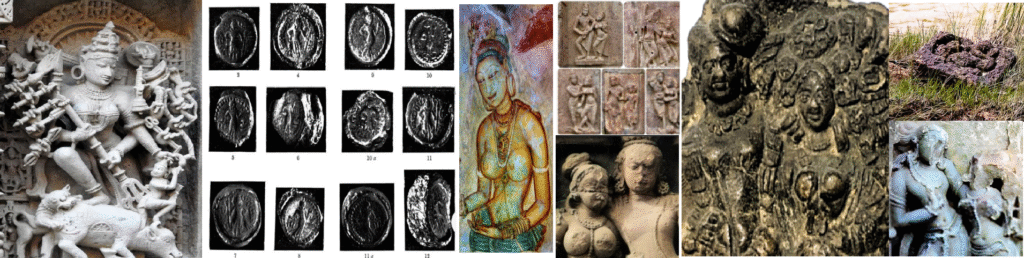
Image credit: https://x.com/GemsOfINDOLOGY