

Preface
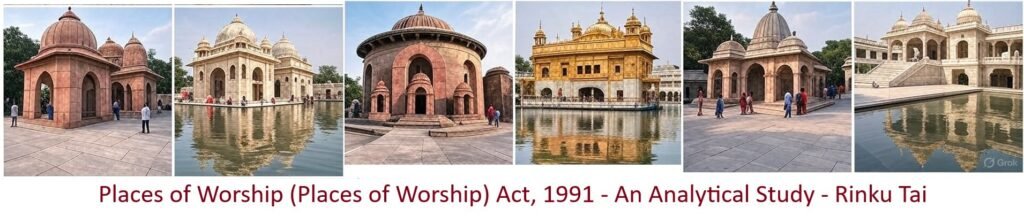
The Places of Worship (Special Provisions) Act, 1991, was enacted to maintain the status quo of religious sites in Bharat, preserving their character as it was on August 15, 1947. This book examines how this law applies in today’s Bharat, especially in relation to Hindu sentiments. We explore its impact through recent legal battles like those over the Gyanvapi Mosque and Shahi Idgah, which have reignited debates on secularism, historical claims, and religious rights. This book aims to understand the Act’s role in navigating the complex interplay of culture, law, and identity in modern Bharat, highlighting the tension between tradition and contemporary secularism.
Foreword
In the annals of Bharat’s legislative history, few acts have sparked as much debate and controversy as the Places of Worship (Special Provisions) Act, 1991. This piece of legislation, intended to preserve the religious character of places of worship as it existed on the 15th day of August 1947, has been both a beacon of peace and a point of contention.
The Act was enacted in the backdrop of communal tensions, aiming to freeze the status quo of religious places to prevent further disputes. However, this very intention has been criticized for institutionalizing historical injustices. By setting a cut-off date that coincides with Bharat’s independence, the Act inadvertently perpetuated the outcomes of centuries of invasions, conquests, and conversions, which led to the appropriation or destruction of many places of worship.
Critics argue that the Act has essentially legalized the status quo of religious hegemony established by historical conquerors, thereby denying many communities the right to reclaim their sacred spaces. This has been particularly poignant in cases where historical evidence suggests a different religious character to these sites before they were altered by subsequent rulers.
This book delves into the complexities of the Act, examining its impact on Bharat’s cultural and religious landscape. It seeks to shed light on the historical injustices embedded within this legal framework, prompting a necessary discourse on reconciliation, justice, and the true essence of secularism in Bharat. Through its pages, we invite readers to reflect on the balance between maintaining peace and correcting historical wrongs, a challenge that continues to shape the nation’s narrative on unity and diversity. As we navigate through the chapters, let us remember that history, while immutable, teaches us lessons that can guide us towards a more equitable future.
Rinku Tai
Add this website to your bookmarks to know more about these laws in simple language so that you can understand the provisions, their purpose, impact of implementation, failure to protect culture and much more. Share if you found it important for battle of cultural preservation.
Know more about laws related to temples…
Pingback: Introduction to Rights Related to Culture and Religion in Bharat – bharatlex-rinkutai.com
Pingback: Places of Worship (Special Provisions) Act, 1991 – An Analytical Study – bharatlex-rinkutai.com