
2.29 Constitution of National Monuments Authority:
Bare Act Provision:
1NATIONAL MONUMENTS AUTHORITY
20F. Constitution of National Monuments Authority.―(1) The Central Government shall, by notification in the Official Gazette, constitute an Authority to be called as the National Monuments Authority.
(2) The Authority shall consist of,―
(a) a Chairperson, on whole-time basis, to be appointed by the President, having proven experience and expertise in the fields of archaeology, country and town planning, architecture, heritage, conservation-architecture or law;
(b) such number of members not exceeding five whole-time members and five part-time members to be appointed, on the recommendation of the Selection Committee referred to in section 20G, by the Central Government, having proven experience and expertise in the fields of archaeology, country and town planning, architecture, heritage, conservation-architecture or law;
(c) the Director-General as member, ex officio.
(3) The tenure of the whole-time Chairperson or every whole-time member and every part-time member, of the Authority shall be three years from the date on which he assumes office as such and shall not be eligible for re-appointment:
Provided that, save as otherwise provided in clause (c) of sub-section (2), any person who has held any post in the Archaeological Survey of India or in the Ministry of Culture of the Government of India or a State Government or has not been found fit to be considered for being appointed to any such post shall, not be eligible to be appointed as the Chairperson or a member of the Authority:
Provided further that any person, who had either been granted a permission or licence or refused any such permission or refused grant of a licence or any person or any of his relative having any interest in a prohibited area or a regulated area shall not be eligible to be appointed as a Chairperson or member.
Explanation.―For the purposes of this section, “relative” means―
(i) spouse of the Chairperson or member of the Authority;
(ii) brother or sister of the Chairperson or member of the Authority;
(iii) brother or sister of the spouse of the Chairperson or member of the Authority;
(iv) brother or sister of either of the parents of the Chairperson or member of the Authority;
(v) any lineal ascendant or descendant of the Chairperson or member of the Authority;
(vi) any lineal ascendant or descendant of the spouse of the Chairperson or member of the Authority;
(vii) spouse of the person referred to in clauses (ii) to (vi);
(4) An officer, not below the rank of Joint Secretary to the Government of India, shall be the Member Secretary of the Authority.
(5) The Central Government shall provide such number of officers and other employees as may be necessary for discharge of functions by the Authority under this Act.
Footnote:
1. Ins. by Act 10 of 2010, (w.e.f. 16-6-1992).
2.29.2 Establishment of the National Monuments Authority
As per Section 20F(1) of the AMASR Act, the Central Government will officially create a body called the National Monuments Authority (NMA) through a public announcement in the Official Gazette.[1] This provision establishes a dedicated authority to oversee the protection of ancient monuments and archaeological sites in Bharat. It ensures a centralized, expert body is responsible for implementing the AMASR Act, promoting consistency and accountability in heritage preservation.
2.29.3 Composition of the Authority
As per the Section 20F(2) of the AMASR Act, the NMA will have:
1. A full-time Chairperson, chosen by the President, who must be an expert in fields like archaeology, town planning, architecture, heritage, conservation, or law.
2. Up to five full-time and five part-time members, selected by the Central Government based on recommendations from a Selection Committee under Section 20G, who also must have expertise in the same fields.
3. The Director-General of the Archaeological Survey of India (ASI), who automatically serves as a member.
This ensures the NMA is composed of qualified experts who can make informed decisions about heritage protection. Including the Director-General ensures coordination with the ASI, while diverse expertise strengthens the Authority’s ability to address complex issues like urban development near monuments.
2.29.4 Tenure and Eligibility Restrictions
As per Section 20F(3) of the AMASR Act, the Chairperson and members including full-time and part-time serve for three years and cannot be reappointed. Except for the Director-General, people who have worked in the Archaeological Survey of India, the Ministry of Culture, or a State Government, or who were deemed unfit for such roles, cannot be appointed to the NMA.[2] Anyone who has applied for or been denied permission or a license for activities in a prohibited or regulated area e.g., within 100 or 200 meters of a monument, or whose relatives have interests in such areas, cannot be appointed. “Relatives” include a person’s spouse, siblings, parents, children, grandchildren, or their spouses’ siblings, parents, or children. This provision ensures impartiality and independence by limiting tenure to avoid entrenched interests and excluding individuals with potential conflicts of interest e.g., prior involvement in regulated areas or government roles. It promotes fresh perspectives and prevents bias in decision-making, critical for fair heritage management.
2.29.5 Member Secretary:
As per Section 20F(4) of the AMASR Act, a senior government officer, at least at the level of Joint Secretary, will serve as the Member Secretary, handling administrative tasks for the NMA. This ensures the NMA has a high-ranking official to manage its operations efficiently, bridging the gap between policy and implementation while maintaining administrative credibility.[3]
2.29.6 Support Staff
As per Section 20F(4) of the AMASR Act, the Central Government will provide enough staff and officers to help the NMA carry out its duties under the AMASR Act. This provision ensures the NMA has adequate resources to function effectively, recognizing that expert decision-making requires sufficient administrative and logistical support to implement the Act’s objectives.[4]
Section 20F of the AMASR Act establishes the National Monuments Authority as a specialized, expert-driven body to oversee the protection of Bharat’s ancient monuments and archaeological sites. Its provisions aim to ensure expertise, independence, and administrative support while preventing conflicts of interest. However, potential loopholes, such as ambiguous selection criteria, restrictive eligibility rules, resource constraints, and lack of transparency, could undermine its effectiveness. Addressing these challenges through clearer guidelines, robust funding, inclusive representation, and accountability mechanisms would strengthen the NMA’s ability to safeguard Bharat’s cultural heritage.
2.29.7 Interpretation by Court:
Section 20-F of the Act speaks about the constitution of National Monuments Authority, which shall include a Chairperson and such number of members, not exceeding five whole-time members and five part-time members who shall have the necessary expertise in the field of archaeology, country and town planning, architecture, heritage and conservation – architecture or law.[5]
The formation of the Authority is not for a matter of formality, but for the purpose of discharging the duties and functions in a proper manner as envisaged under the Act.[5]
References:
[1] Citizen’s Charter/ Client’s Charter for National Monuments Authority (NMA), Last Updated On 24 February, 2025, available at https://www.nma.gov.in/show_content.php?lang=1&level=0&ls_id=6&lid=24&nma_type=0, Last visited on 7.17.2025
[2] “Union Culture Minister Shri G Kishan Reddy chairs the 37th meeting of Central Advisory Board of Archaeology (CABA)” PIB, Dt. 14.06.2022, available at https://www.pib.gov.in/PressReleaseIframePage.aspx?PRID=1834038, Last visited 16.07.2025
[3] “Report of the Select Committee on The Ancient Monuments and Archaeological Sites and Remains (Amendment) Bill, 2018”, Rajya Sabha Secretariat, New Delhi, February, 2019/Magha, 1940 (Saka)
[4] “Follow-up on the Performance Audit of Preservation and Conservation of Monuments and Antiquities”, Union Government (Civil) Ministry of Culture Report No. 10 of 2022 (Performance Audit), Report of the Comptroller and Auditor General of India.
[5] B. Manoharan vs The Ministry Of Culture, W.P. No.32163/2022, Madras High Court available at: https://indiankanoon.org/doc/179346241/
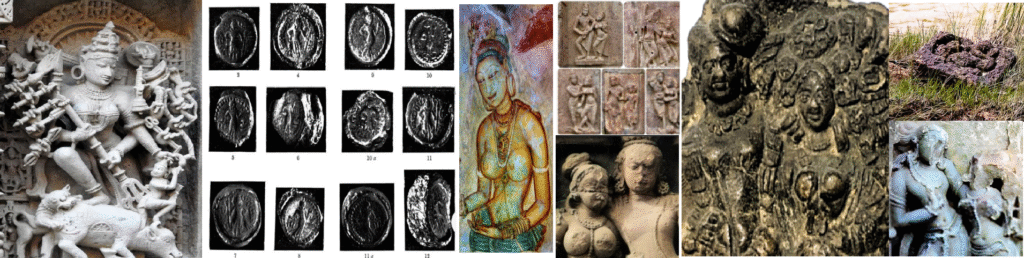
Image credit: https://x.com/GemsOfINDOLOGY
Pingback: AMASRA: 2.30 Section 20G. Selection Committee for selection of members of Authority. – bharatlex-rinkutai.com