
2.26 Application for repair or renovation in prohibited area, or construction or re-construction or repair or renovation in regulated area:
2.26.1 Bare Act Provision:
1[20C. Application for repair or renovation in prohibited area, or construction or re-construction or repair or renovation in regulated area.―(1) Any person, who owns any building or structure, which existed in a prohibited area before the 16th day of June, 1992, or, which had been subsequently constructed with the approval of the Director-General and desires to carry out any repair or renovation of such building or structure, may make an application to the competent authority for carrying out such repair or renovation, as the case may be.
(2) Any person, who owns or possesses any building or structure or land in any regulated area, and desires to carry out any construction or re-construction or repair or renovation of such building or structure on such land, as the case may be, may make an application to the competent authority for carrying out construction or re-construction or repair or renovation, as the case may be.
Footnote:
1. Ins. by Act 10 of 2010, s. 7 (w.e.f. 16-6-1992).
Section 20C of the Ancient Monuments and Archaeological Sites and Remains (AMASR) Act outlines the process for obtaining permission to carry out repair, renovation, construction, or reconstruction in the prohibited area and regulated area around protected monuments and archaeological sites.
2.26.2 Application for Repair or Renovation in Prohibited Area
As per the Section 20C(1) of the AMASR Act, if someone owns a building in the prohibited area that was built before June 16, 1992, or was later approved by the Director-General, they can request permission from the competent authority to repair or renovate it. This applies only to maintenance work, not new construction, as construction is generally banned in the prohibited area as per Section 20A.
This provision reflects the doctrine of limited maintenance for pre-existing structures. It acknowledges that buildings existing before the stricter regulations of 1992, or those approved later, may require upkeep to remain functional, but such work must be strictly regulated to protect the monument’s integrity. The requirement of approval ensures oversight to prevent misuse.[1] The purpose is to allow necessary repairs or renovations to existing structures in the prohibited area while ensuring that such activities do not harm the protected monument or site.
2.26.3 Application for Construction, Reconstruction, Repair, or Renovation in Regulated Area:
As per Section 20C(2) of the AMASR Act, in the regulated area, which is less restrictive than the prohibited area, owners or possessors of buildings or land can apply for permission to build new structures, rebuild existing ones, or perform repairs or renovations.[2] The competent authority reviews these applications to ensure compliance with conservation goals.
This embodies the doctrine of controlled development. Unlike the prohibited area, the regulated area allows a broader range of activities including new construction, but these are subject to approval to balance development needs with the preservation of the monument’s setting and aesthetic value. The purpose is to provide flexibility for development in the regulated area while ensuring that such activities do not adversely affect the protected monument or site.
Section 20C of the AMASR Act facilitates regulated maintenance and development around protected monuments by allowing applications for repair, renovation, construction, or reconstruction in prohibited and regulated areas. Its provisions reflect the doctrines of limited maintenance for pre-existing structures and controlled development, aiming to balance heritage preservation with practical needs. However, ambiguities in terminology, lack of procedural timelines, and insufficient safeguards for decision-making create loopholes that could undermine conservation goals.
2.26.4 Interpretation of provision done by Court:
Section 20-C likely outlines the application and approval process for obtaining permissions to construct in prohibited areas, including procedural safeguards and conditions for compliance. On 16 June 1992, ASI issued a notification under Rule 32 of the Ancient Monuments and Archaeological Sites and Remains Rules 1959, defining 100 meters around protected monuments as a prohibited area and 200 meters as a regulated area, which laid foundation stone for permission process under this Section. Section 20-C(1) operates in two well defined areas. The first is where any person who owns any building or structure which existed in a prohibited area before 16 June 1992 desires to carry out any repair or renovation. The second is in respect of a structure which has been constructed after 16 June 1992 with the approval of the Director-General, where the owner desires to carry out repair or renovation. [3]
The expression “renovation” in Section 20-C will take its colour from the word “repair” appearing in that section and this would mean that in the garb of renovation, the owner of a building cannot demolish the existing structure and raise a new one and the competent authority cannot grant permission for such reconstruction.[4]
References:
[1] Iqbal Masud Khan vs. Director General, Gujarat High Court in WP (PIL) 214 of 2013, Dt. 8.08.2014 available at https://indiankanoon.org/doc/199652408/, Last visited on Dt. 18.07.2025
[2] “Cultural Heritage Policies in India: An Overview”, Abhishek Kajal, HeinOnline, available at: https://heinonline.org/HOL/LandingPage?handle=hein.journals/injloitd4&div=4&id=&page=, Last visited on 23.07.2025
[3] Parisar Sanrakshan Sanwardhan Sanstha vs Pune Municipal Corporation [(2013) 6 ALLMR 161 (BOM)]
[4] Archaeological Survey of India vs. Narender Anand & Ors. [(2012) 2 SCC 562]
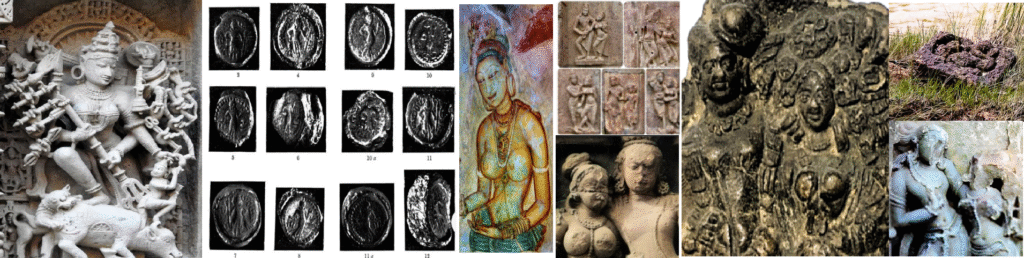
Image credit: https://x.com/GemsOfINDOLOGY



Pingback: AMASRA: 2.32 Section 20-I. Functions and powers of Authority. – bharatlex-rinkutai.com
Pingback: AMASRA: 2.31 Section 20H. Salary, allowances and meetings of Authority. – bharatlex-rinkutai.com