
2.17 Section 14
2.17.1 Bare Act Provision:
14. Maintenance of certain protected monuments.―(1) The Central Government shall maintain every monument which has been acquired under section 13 or in respect of which any of the rights mentioned in section 5 have been acquired.
(2) When the Director-General has assumed the guardianship of a monument under section 5, he shall, for the purpose of maintaining such monument, have access to the monument at all reasonable times, by himself and by his agents, subordinates and workmen, for the purpose of inspecting the monument and for the purpose of bringing such materials and doing such acts as he may consider necessary or desirable for the maintenance thereof.
2.17.2 Central Government’s Duty to Maintain Protected Monuments
Sub-section (1) of Section 14 of the AMASR Act mandates that the Central Government is responsible for the upkeep and preservation of every monument acquired under Section 13 i.e. acquisition of protected monuments or those for which rights have been acquired under Section 5 i.e. guardianship or other rights over monuments. This places a legal obligation on the Central Government to ensure these monuments are maintained, which includes repair, restoration, and protection from damage or decay.[1]
By the Doctrine of Public Trust, the Central Government acts as a trustee of cultural heritage, holding the responsibility to preserve these monuments for current and future generations. State Responsibility reflects the principle that the state must safeguard national heritage as part of its sovereign duty.
2.17.3 Director-General’s Access for Maintenance
Section 14(2) grants the Director-General the right to access a monument under their guardianship as per Section 5 at all reasonable times. The Director-General, along with their agents, subordinates, and workmen, can inspect the monument, bring necessary materials, and perform acts deemed necessary for its maintenance. This ensures practical access to carry out preservation work.
Doctrine of Administrative Authority reflects the principle of delegated authority, where the Director-General is empowered to act on behalf of the state to fulfill its preservation duties. The clause allows actions deemed “necessary or desirable,” giving administrative flexibility to address urgent or practical needs in monument upkeep, this is doctrine of necessity.
Section 14, while establishing clear responsibilities for monument maintenance, suffers from vague terminology like “maintain,” “reasonable times,” “necessary or desirable”, lack of accountability mechanisms, and centralized control without provisions for local involvement. The absence of funding provisions and penalties for non-compliance further weakens its effectiveness. Additionally, the law does not address modern challenges like climate change, tourism pressure, or community engagement, which are critical for monument preservation.
Reference:
[1] Report of the Comptroller and Auditor General of India on Performance Audit Of Preservation And Conservation Of Monuments And Antiquities, Union Government (Civil) Ministry of Culture Report No.18 of 2013
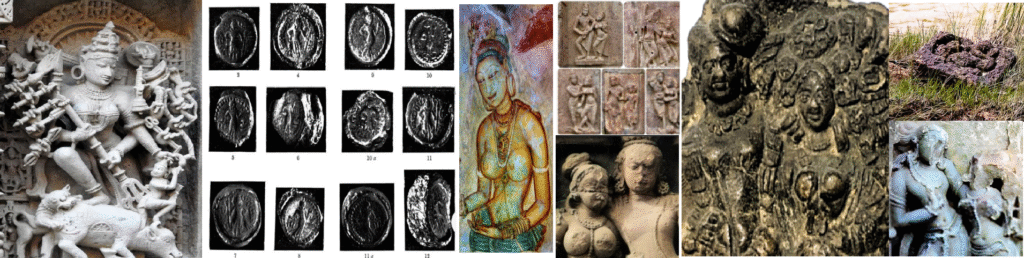
Image credit: https://x.com/GemsOfINDOLOGY

Pingback: AMASRA: 2.24 Section 20A. Declaration of prohibited area and carrying out public work or other works in prohibited area. – bharatlex-rinkutai.com
Pingback: AMASRA: 2.27 Section 20D. Grant of permission by competent authority within regulated area. – bharatlex-rinkutai.com
Pingback: AMASRA: 2.18 Section 15. Voluntary contributions. – bharatlex-rinkutai.com